A Scientific Roadmap for Emotional Intelligence in Healthcare”

Doctor showcasing emotional intelligence

Introduction Unsurprisingly, to everyone working in the industry, healthcare professionals commonly face emotionally charged situations that demand immediate action. Unfortunately, these often come without the luxury of processing their own emotional responses.  This is where emotional intelligence (EI) becomes indispensable. EI is the ability to monitor one’s own and others’ feelings, discriminate among them, and … Read more

Measuring Communication Skills in Healthcare

communication skills in healthcare assessment

Communication Skills in Healthcare: From Soft Skill to Measurable Clinical Competency Clinical communication skills shape diagnosis, decision-making, and patient safety. Yet many healthcare programmes still treat communication as a soft skill rather than a measurable clinical competency. When educators fail to define clinical communication skills in behavioural terms, learners struggle to improve them. If communication … Read more

Deescalating Situations in Healthcare

deescalating situations healthcare

Deescalating Situations in Healthcare: Why It Matters in Clinical Practice Deescalating situations is not a soft skill. It is a core clinical competence. In healthcare, emotional tension can quickly disrupt judgment, teamwork, and patient safety. Therefore, learning to manage escalation is part of learning to practice safely. Effective communication sits at the center of clinical … Read more

Emotional Cues in Healthcare

emotional cues in healthcare

Emotional Cues in Healthcare: How to Recognize, Interpret, and Assess Them in Clinical Training Emotional cues in healthcare are verbal or nonverbal signals that reveal a patient’s emotional state, concerns, or life context. These cues may appear as direct statements, subtle hints, tone shifts, or body language. In clinical training, recognizing emotional cues transforms communication … Read more

Continuous Professional Development in Medicine – Made Easy

asks the question What CPD in medicine is

  This Blog is a practical Guide for CPD (Continuous Professional Development in the field of medicine), based on the WFME-Standards-for-Continuing-Professional-Development, which is very helpful if you want to become an expert on the topic, but also quite dense to read through.  If you’re a doctor, chances are you’ve heard the phrase continuous professional development … Read more

Generic vs Specialized Video Tools for Healthcare Settings

Across healthcare education and clinical training, video recording increasingly functions as institutional infrastructure rather than a supplementary teaching tool. Universities and teaching hospitals rely on video to support communication skills training, simulation, assessment, supervision, and research. Once video is used in these contexts, especially when it supports assessment, appeals, or real patient encounters, procurement classification … Read more

The Difference Between Synchronous and Asynchronous Learning in Healthcare

The real issue isn’t synchronous vs asynchronous learning Most debates about synchronous versus asynchronous learning in healthcare start in the wrong place. The problem usually isn’t that educators chose the wrong format. It’s that formats get treated as strategies, rather than tools that serve different learning purposes. In healthcare and teacher education alike, learning often … Read more

Strategies for Effective Communication in Healthcare

effective Communication in Healthcare

Why effective communication in healthcare is taught Effective communication in healthcare is already well established as a core competency. It appears in accreditation standards, competency frameworks, and learning outcomes across medical, nursing, and allied health education. Learners are taught to listen actively, show empathy, and involve patients in decisions. Yet despite this formal emphasis, communication … Read more

Effective Debriefing for Simulation-Based Medical Education

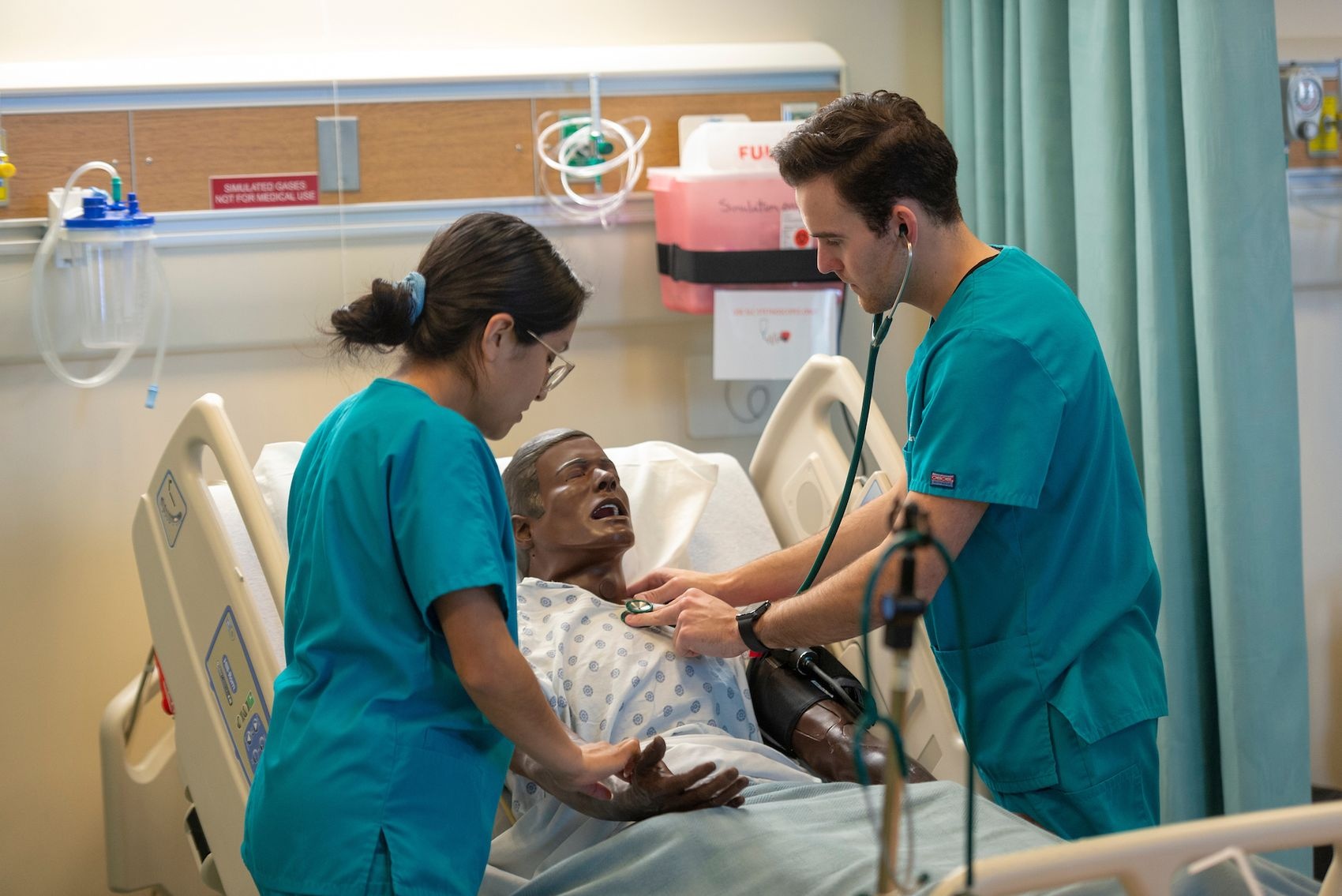
Medical simmulation

Introduction A quintessential part of medical education is simulation-based learning, where both students and medical professionals are confronted with situations out of their comfort zone in a controlled environment. While simulation provides the experience, it is the structured reflection that transforms that experience into knowledge. Often seen as a post-scenario chat or confused with Feedback, … Read more

Getting Started with Video-Based EPAs

Entrustable Professional Activities (EPAs) reshape how educators judge readiness for practice in health professions education.  Rather than asking whether a learner can perform a task in theory or in simulation, educators now ask a more critical question: can this learner be trusted to carry out this task independently in real clinical environments? Unlike Objective Structured … Read more